 NexMask-官方博客
Let's start with the conclusion: It depends on whether you'll need this account in the future.
If you're just downloading a resource, claiming a one-time offer, trying out a tool, or testing a sign-up form and won't log in again, a temporary email is perfect. But if the account will be used long-term, store data, or be linked to payments, or if you might need to recover a password or enable two-factor authentication later, don't use a temporary email. In that case, switch to a long-lasting alias: your real email stays private, and you can always receive messages.
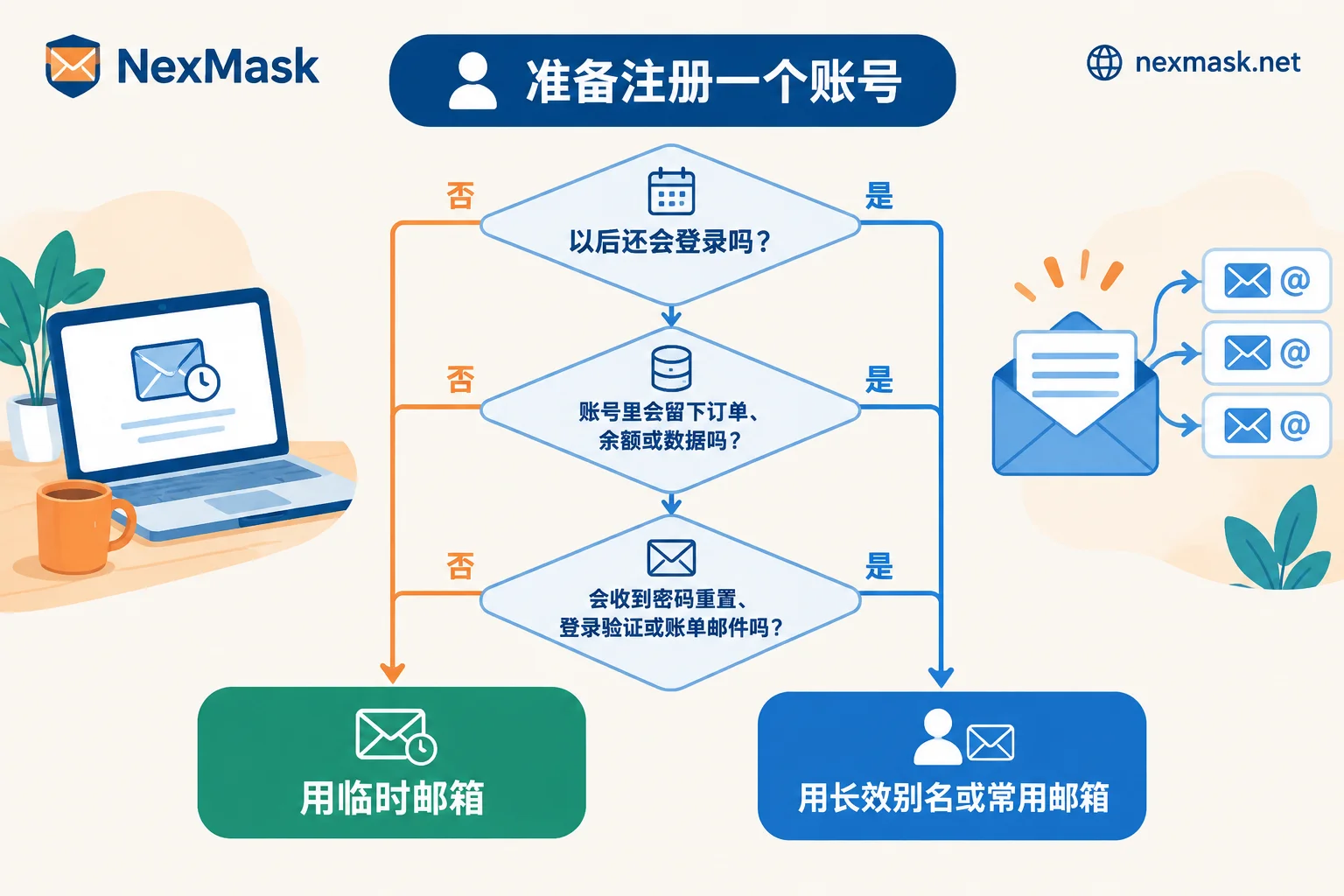
Ask Yourself Three Questions Before Registering
- Will you log in again? This includes switching devices, clearing cache, or coming back months later.
- Will the account hold anything? For example, orders, balances, memberships, work, chat history, or cloud files.
- Will the platform send emails you must see? For example, password resets, login verification codes, suspicious login alerts, billing receipts, or changes to terms of service.
If all three are "no," you can safely use a temporary email. If any is "yes," switch to a long-lasting alias or your regular email.
When a Temporary Email for Registration Is Suitable
- Downloading whitepapers, reports, or templates where the site requires an email to get the link
- Claiming one-time discount codes or trial codes
- Taking a quick look at a forum or small tool without planning to use it long-term
- Developing and QA testing sign-up flows, checking verification email templates and links
In these scenarios, the features of temporary email are exactly what you need: no registration, no phone number required, and the entire mailbox is destroyed upon expiry. Any marketing emails the site sends later won't reach your real inbox, so one-time registrations won't become a long-term source of spam.
Why You Shouldn't Use a Temporary Email for Long-term Accounts
First, password recovery and two-factor authentication will be blocked. Once the temporary email is destroyed after expiry, that address can't receive messages. If you later forget your password after logging out, need an email verification code on a new device, or the platform triggers a security check, the code will be sent to a non-existent email, and you may never be able to access the account again. After a temporary email expires, the messages inside are basically unrecoverable.
Second, you'll miss important notifications. Transaction receipts, renewal reminders, suspicious login alerts, and terms changes often relate to money and account security. Sending them to a temporary email means no one sees them.
Third, some services carry a risk of being seen by others. With some public or round-robin temporary email services, others might also see emails in the same inbox. If that email is a password reset link, the risk isn't just missing the message. For details, see Are Temporary Emails Safe.
Registration Rejected? Usually the Platform Is Blocking Disposable Emails
Many SaaS, e-commerce, and social platforms use temporary email blacklists or email validation services. When you submit a registration form, they check the email domain, MX records, and whether the domain has a catch-all setup that accepts anything. If it's identified as a disposable email, you'll typically see one of three outcomes:
- The form returns an error, saying the email is unavailable or unsupported.
- Registration appears successful, but the verification email never arrives—it was silently blocked, and it's easy to mistake this for a delivery delay.
- Registration succeeds at the time, but later risk scores are high, leading to restrictions or bans during use. This has the biggest impact on long-term accounts.
How to handle it depends on your purpose:
- Just grabbing a one-time resource: Try another address; if it still fails, move on. It's not worth spending more time on a low-value resource.
- Account for long-term use: Don't keep trying different temporary emails. Even if it works this time, you might be flagged by risk controls later. Switching to a long-lasting alias is more reliable. However, note that whether an alias domain passes a given platform's validation ultimately depends on the platform's rules.
For a more complete troubleshooting guide, see What to Do If a Temporary Email Is Rejected.
Already Registered an Important Account with a Temporary Email? How to Fix It
While you can still log in, immediately go to account settings and change the login email to a long-lasting alias or your regular email. Many platforms send a verification to the old email when changing it, so make sure to complete the change before the temporary email expires. If the email has already expired, see What to Do If a Temporary Email Expires for what can still be salvaged.
Choose by Purpose, Then Claim
- One-time registration, testing: Just claim a temporary email—no registration, no phone number, and it auto-destroys on expiry. If you need many addresses for testing, bulk generation is a member feature.
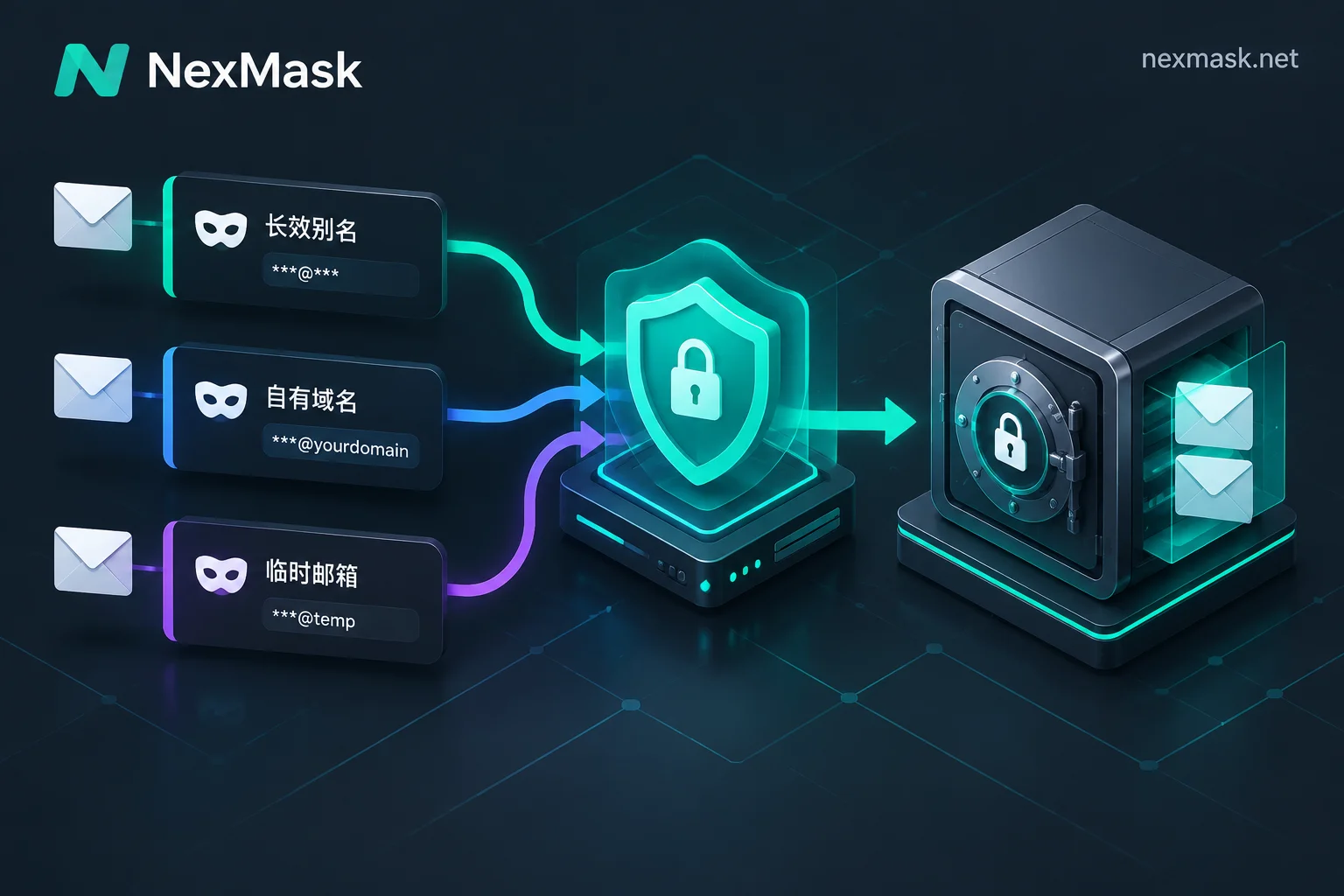
- Want long-term use without exposing your real email: Use a long-lasting alias. It remains usable within the validity period; we recommend using one alias per website. Emails are forwarded as-is to your regular inbox, and you can reply using the alias identity. If a site starts sending spam, just disable that alias alone—other accounts are unaffected, and you can also see which company leaked your address. The free plan includes one alias; for specific validity periods and membership benefits, please refer to the official website.
Simply put: Use a temporary email for registrations you'll discard after use, and a long-lasting alias for accounts you'll come back to.



Comments(0)