 NexMask-官方博客
Choose based on one condition: will this address need to receive email in the future? If you only need to receive a verification code once during registration and won't log in again, a disposable temporary email is sufficient. As long as you might receive verification codes, reset passwords, or recover the account later, use an email alias that can continuously forward emails. In 2026 privacy guides and user community discussions, account lockouts due to misuse of disposable inboxes remain a frequent pain point, which is why search volume is currently rising.
Conclusion First: Whether You Can Recover the Account Determines Which One You Use
The logic is simple: does the account rely on email as the sole credential? If so, once the address becomes invalid, the account loses its recovery path. Disposable temporary emails have no password, no persistent account, no forwarding, and typically last only minutes to hours. Email aliases are long-term forwarding masks that relay emails to a real inbox, can continuously receive verification codes and password reset emails, and can be independently deactivated as needed.
Technical Boundary Breakdown: Disposable Inbox vs Long-Term Alias Forwarding to Real Email
The two differ significantly in three attributes: lifespan, whether they land in a real inbox, and whether they can receive emails repeatedly. Disposable temporary emails are standalone, throwaway inboxes that do not forward or retain emails, suitable for one-time verification code reception. Email aliases rely on a real inbox, are long-term valid, and can receive emails repeatedly. This also answers "can emails be seen after the temporary email expires"—emails are usually cleared and cannot be accessed again after expiration.
Many people confuse disposable temporary emails with anonymous emails, but they are not the same. Anonymous email emphasizes hiding your true identity from the sender, whereas temporary email is just a short-term receiving tool and does not guarantee anonymity.
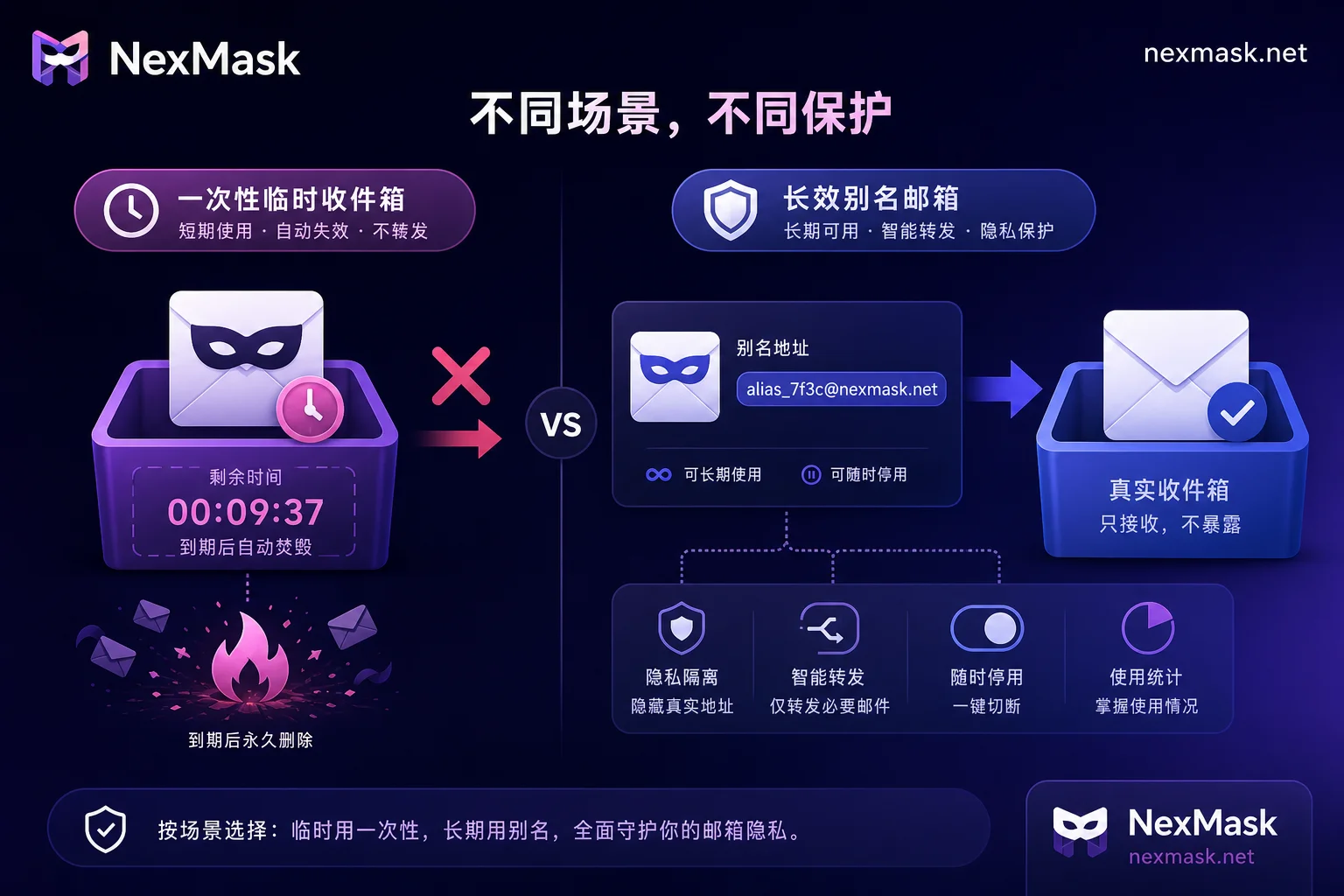
Comparison Table for 5 Account Types: Registration Verification, Download Trials, Shopping Logistics, Financial and Government, Long-term Subscriptions
| Account Type | Recommended Usage | Need for Secondary Email? | Recoverable After Loss? |
|---|---|---|---|
| Registration verification | Disposable temporary email | No | No (depends on email verification) |
| Download trial | Disposable temporary email | No | No (usually no need to recover) |
| Shopping logistics | Email alias | Yes (shipping notifications, after-sales) | Yes (via alias forwarding) |
| Financial and government | Full email | Yes (identity verification, bills) | Yes (requires strict identity verification) |
| Long-term subscription | Email alias | Yes (renewals, password resets) | Yes (via alias forwarding) |
Recovery Steps After Misusing Disposable Temporary Email: When It Can Still Be Saved vs When It's Too Late
If you've already misused it, check in this order: first, see if the account is linked to a phone number or secondary email; second, check if you're still logged in; third, try platform manual appeal, providing evidence such as order number or registration time. If the only credential is the destroyed temporary address and the platform only uses email verification, you usually cannot self-recover and must contact customer service with other information. Different platforms have different policies; refer to each platform's official documentation for specifics.
Advanced Control on the Alias Side: One Alias per Site, Independent Deactivation, and Sender Filtering Trend
In August 2026, addy.io released Duo and Family plans, allowing family members to share the same custom domain and adding the ability to blacklist sender emails or domains via rule actions. This shows that email aliases are evolving from simple forwarding tools to a controllable exposure management hub. For average users, using a unique alias per site helps trace the source of leaks, deactivate sold addresses independently, and filter by sender domain, ensuring better long-term identity isolation.
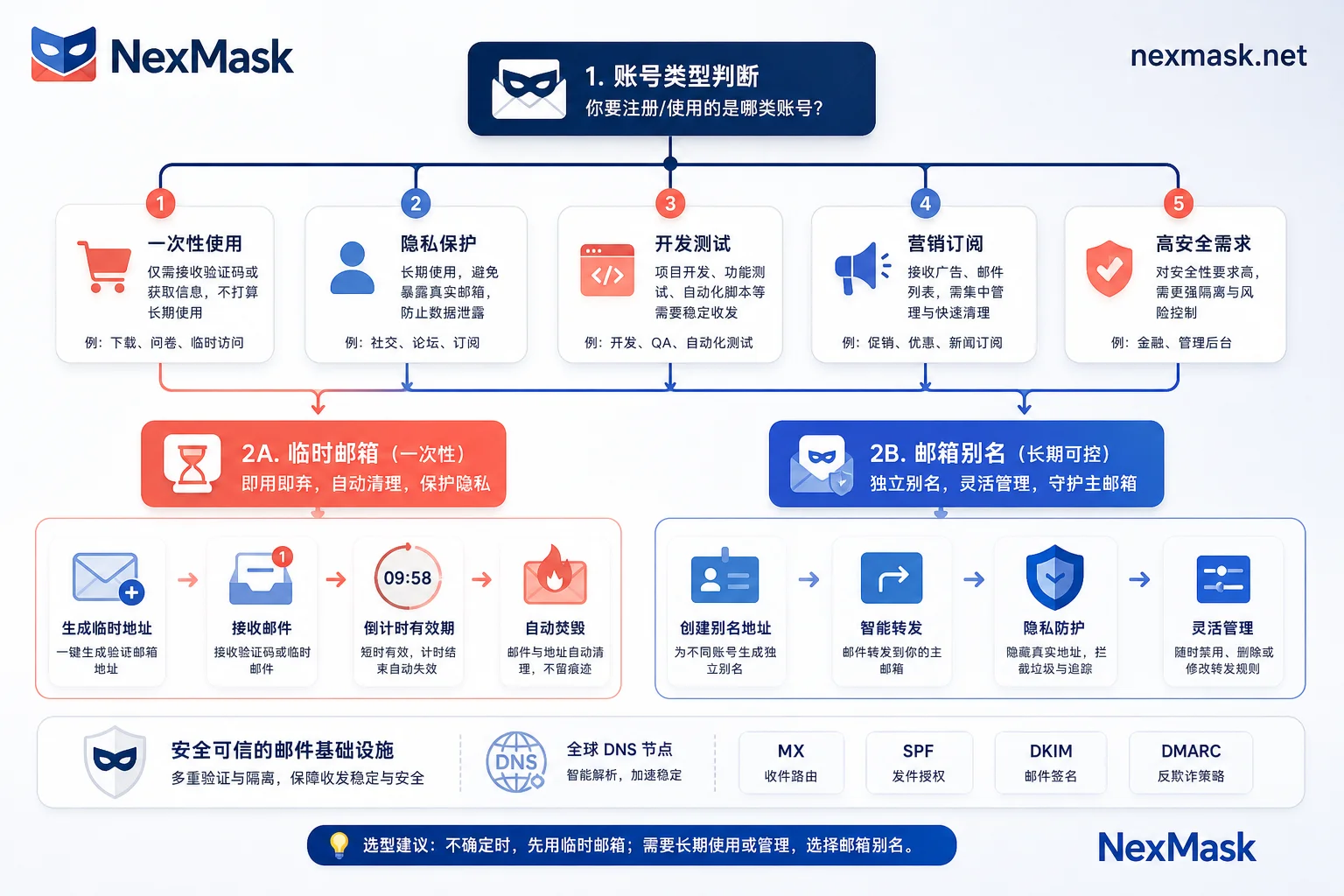
Which Scenarios Do NexMask's Two Entry Points Suit?
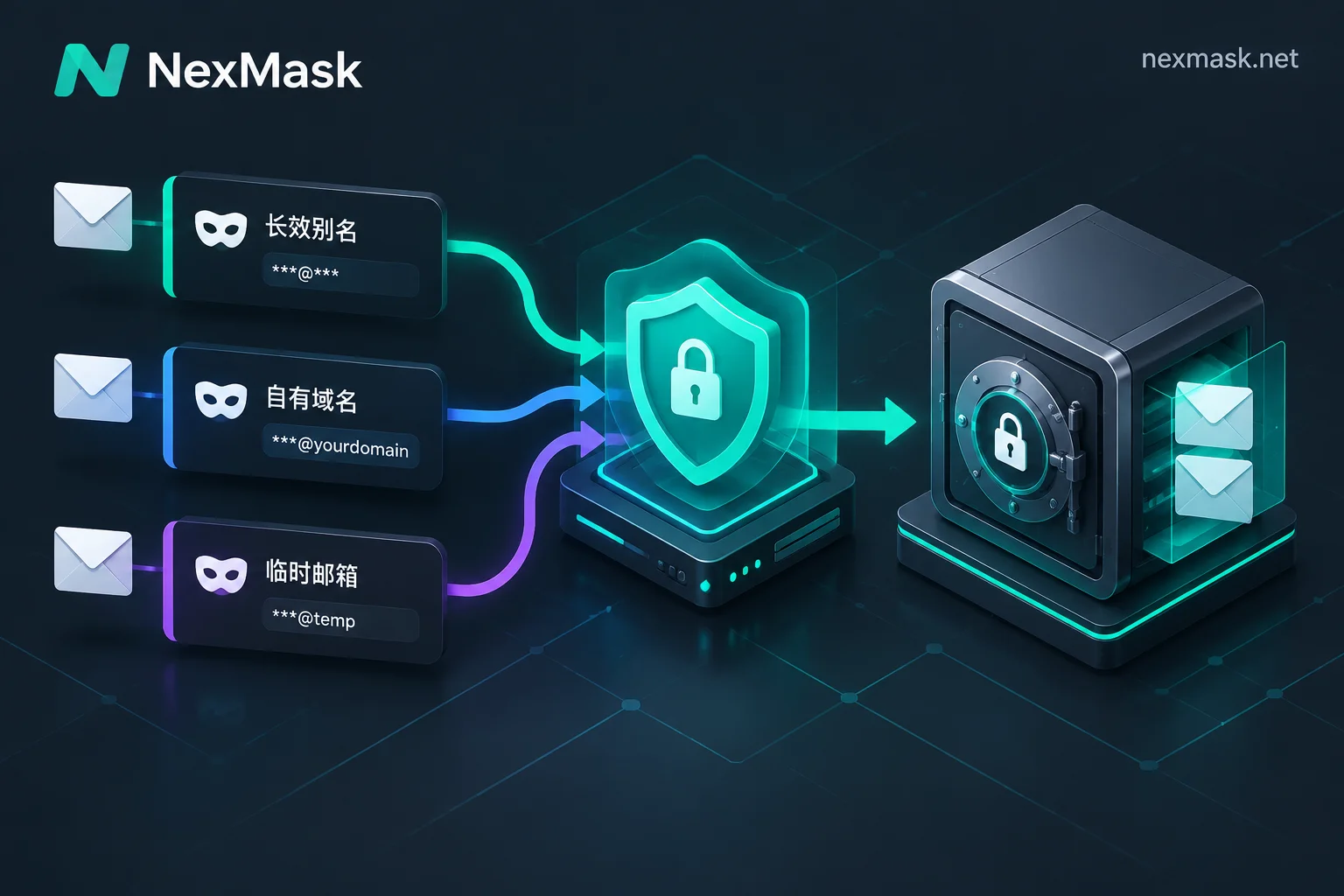
NexMask offers both a no-registration disposable temporary email (ready to use, inbox auto-destroys after expiration, suitable for short-term verification and trials) and long-term anonymous aliases that forward to your primary email (different aliases for different sites, can be deactivated independently, suitable for accounts that need ongoing email reception). It also supports email forwarding and custom domain aliases for long-term identity migration. For details like storage duration, free quotas, domain and forwarding restrictions, please refer to the official website for verification. Note that disposable temporary emails cannot replace a secure email service, password manager, or two-factor authentication. If you encounter forwarding issues, refer to NexMask Email Forwarding Not Receiving? Troubleshooting to locate the problem.
Before your next registration, ask yourself: "Will this address need to receive emails in the future?" If yes, use a forwardable alias; if no, use a disposable temporary email. If you have important accounts bound to temporary addresses, rebind them to a long-term accessible email as soon as possible.
Frequently Asked Questions
Can disposable temporary emails receive verification codes?
Yes. Most temporary emails can receive verification codes, which is their core purpose. However, verification code emails may be intercepted or delayed, and since the inbox has no password protection, there is a risk of others reading sensitive account verification codes. It's recommended to use them only for low-value registrations.
Can accounts registered with temporary emails be recovered?
Usually not. If the account's sole credential is a temporary address that has expired and there are no other linked credentials, the platform cannot recover the account via email verification. Some platforms support manual appeals, but success depends on platform policies and the evidence you can provide.
Can emails be seen after the temporary email expires?
No. Once a temporary email expires, its inbox and emails are destroyed and not forwarded to your primary email. Therefore, do not use temporary emails for any emails that need to be kept long-term.
Which accounts should not be registered with disposable emails?
Financial, government, work email, and other identity-bound accounts, as well as shopping and subscription accounts that need to receive notifications, bills, or after-sales emails, should not use disposable emails. These accounts are hard to recover and pose identity theft risks.
Is a disposable email the same as an anonymous email?
No. A disposable email is a short-term receiving tool emphasizing use-and-discard; an anonymous email focuses on hiding your true identity and may offer features like encryption or self-destruction. The purposes and mechanisms are different, so choose based on your actual needs.


Comments(0)