 NexMask-官方博客
Bulk ChatGPT account registration is not feasible—three independent blocks (terms, domain, and recovery) each suffice to invalidate accounts. The OpenAI official Terms of Use effective January 1, 2026 explicitly prohibit automated bulk registration and circumvention of security measures, so from the outset, this path is closed.
First, Break Down Three Independent Blocks: Any One Can Invalidate Your Account
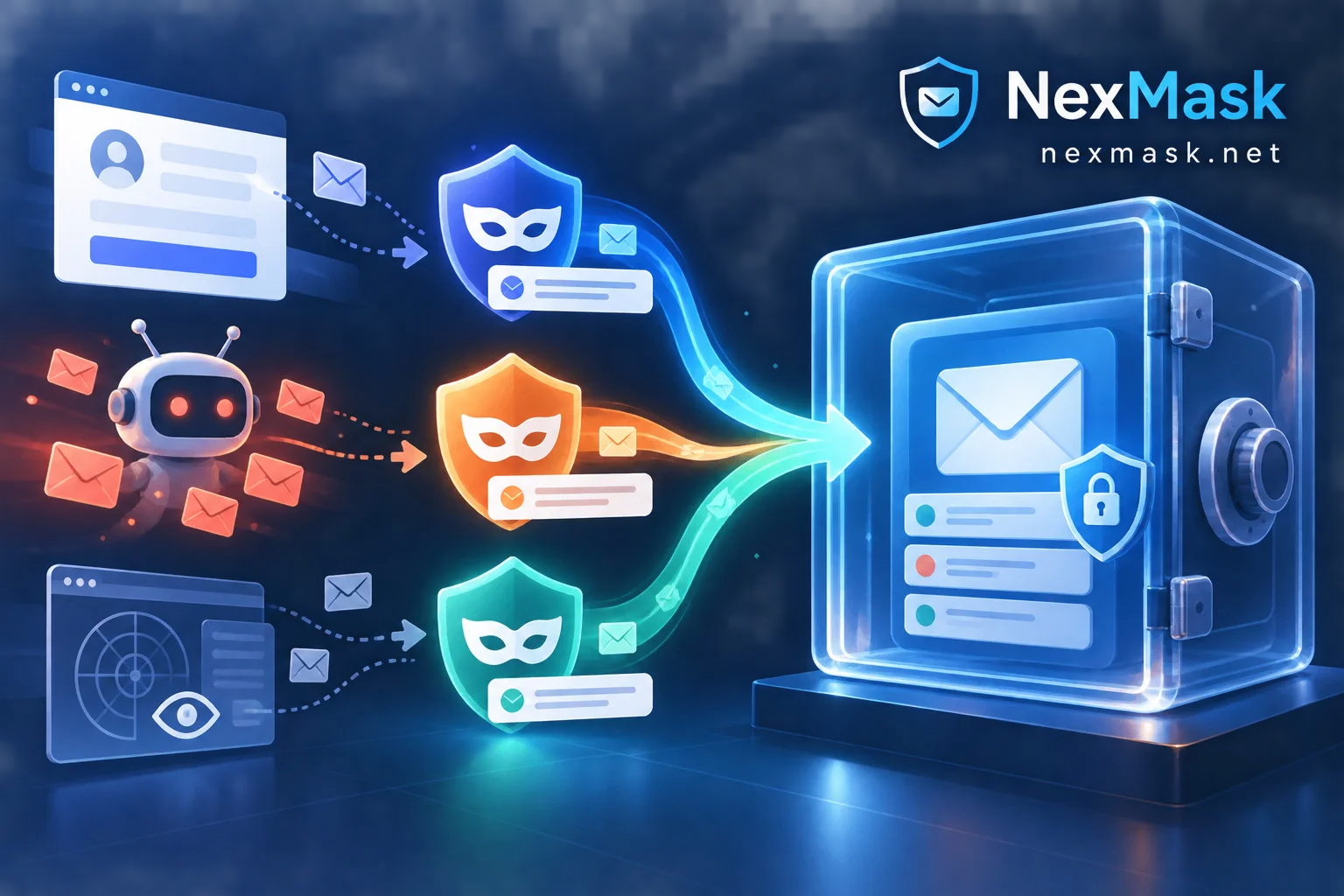
Bulk ChatGPT account registration fails because "bulk" requires passing three unrelated checkpoints: the terms-level usage ban, the domain-level public email filtering, and the recovery-level verification email chain break. Any one of these can invalidate an account independently—they don't need to trigger simultaneously. Below, we explain the mechanism and consequences of each.
Block One · Terms Layer: OpenAI Terms of Use on Bulk Registration
In the official OpenAI Terms of Use effective January 1, 2026, OpenAI explicitly requires that you provide accurate and complete information during registration, prohibits sharing account credentials, prohibits bulk registration via automated or programmatic means, and prohibits circumventing platform rate limits, security mitigations, or protective measures in any way. The consequence of violation is account suspension, termination of service, or even deletion.
The key here is that enforcement targets not individual addresses but "behavior + account sets." When you bulk register with the same batch of emails, if the platform detects automated characteristics, the entire batch of associated accounts is often disciplined, not just one. So, the frequently asked question "Will bulk registered ChatGPT accounts be banned?" is already answered at the terms level: bulk itself is prohibited behavior, and consequences do not depend on a specific number.
Block Two · Domain Layer: Why Temporary Emails Trigger "the email you provided is not supported"
Many people encounter the error the email you provided is not supported, often the moment they enter a temporary email address. OpenAI has deployed dynamic domain filtering on the registration endpoint, which identifies and rejects known public disposable and temporary inbox domains in real time. This phenomenon comes from registration tests conducted by third-party temporary email service providers in May 2026; OpenAI has not published details of the filtering rules. This dynamic domain filtering is an externally observed ongoing phenomenon, and the rules themselves are not public.
Note that this block occurs before submission and has nothing to do with whether your inbox can receive emails—even if your temporary inbox can receive emails right now, if the domain is in the externally observed blacklist, it will be rejected. Moreover, this blacklist is dynamically updated and not fully public (external observation, not official), so "switching to a more obscure temporary domain" is not a stable strategy—it just postpones failure. The correct approach to this error is to switch to a real email or alias that can receive mail long-term and forward, rather than continuing to change temporary domains. You can refer to Temporary Email Registration Rejected for troubleshooting ideas.
Block Three · Recovery Layer: After the Disposable Inbox Expires, Where Do Verification Emails Go?
Suppose you get past the first two layers and complete initial registration with a one-time temporary email. A third layer awaits. ChatGPT relies on the registered email to receive verification codes or login links for cross-device logins, session expirations, password resets, and subscription/billing notifications. One-time temporary emails typically have extremely short lifespans—they self-destruct and cannot be recovered.
Once the inbox is invalid, these verification emails are lost. You won't receive password reset links or be able to verify your identity on a new device, making the account an unrecoverable "dead account." The fundamental difference from the first two layers is that this doesn't require platform detection of violation—you simply cut off the recovery path yourself. So, questions like "Can I recover an account registered with a temporary email if I forget the password?" have a negative answer because there's no valid inbox to receive verification emails. When choosing, compare One-Time Temporary Email vs. Email Alias; the core difference lies in recovery capability.
Often Mistaken as a Fourth Block: Random Address Generators Only Produce Synthetic Test Data
This section isn't about a fourth block but a commonly misunderstood capability boundary: random address generators do not produce identities verifiable by platforms. So-called random names, addresses, cities, ZIP codes, and phone numbers are synthetic test data that conforms to real formats but do not correspond to real residents. Their intended use is development debugging, form placeholders, test fixtures, and boundary value construction—not for passing platform compliance verification.
Filling these into ChatGPT's registration flow violates the tool's intended purpose and directly clashes with the terms requirement for "accurate and complete information." Moreover, such random addresses will immediately fail when scenarios like identity verification or billing reconciliation arise. Can a random address generator be used for account registration? From a compliance standpoint, no, because it cannot meet the platform's minimum requirements for information authenticity.
Layered Error Troubleshooting: Three Phenomena, Three Directions
Those attempting bulk ChatGPT registration typically encounter one of three phenomena below. Converting the three blocks into an actionable troubleshooting sequence helps clarify where you're stuck:
| Phenomenon | Judging Layer | Remedial Direction |
|---|---|---|
| Rejected at submission with "the email you provided is not supported" | Domain-layer reputation issue | Switch to a long-term receivable, forwardable address; don't keep changing temporary domains |
| Registration passes, but verification email isn't received | Inbox destruction or delivery failure | First confirm if inbox expired, then check spam or forwarding chain (see NexMask Email Forwarding Not Received) |
| Account restricted or requires re-verification shortly after registration | Terms and risk-control layer, account-side judgment | Unrelated to changing email; review overall account usage behavior |
Following this order can quickly locate most issues instead of getting stuck in a loop of "try another email."
Situation-Based Tiering for Assigning Emails: Short-Term Verification, Long-Term Main Accounts, and Development Testing
Different use purposes correspond to different address types; mixing them is the main reason for account loss. Use the decision table below:
| Scenario | Recommended Address Type | Key Reason |
|---|---|---|
| Short-term one-time verification, trial inbox | Temporary inbox | Only need to complete initial verification, and no recovery needed later; disposable is acceptable |
| Personal long-term main account | Long-lasting email alias or custom domain alias | Must preserve password reset and billing notification paths; supports one-alias-per-site for leak tracing and independent deactivation |
| Development & QA testing (needs real email reception) | Test email alias | Must receive verification emails while isolating different test cases; aliases can be independently deactivated |
| Development & QA testing (only needs format-correct placeholder data) | Synthetic test data (random names/addresses/ZIP codes, etc.) | For form filling and logic verification only, not for any platform verification |
If you manage multiple long-term ChatGPT accounts, assign an independent email alias per account and record which site uses which alias to avoid mix-ups.
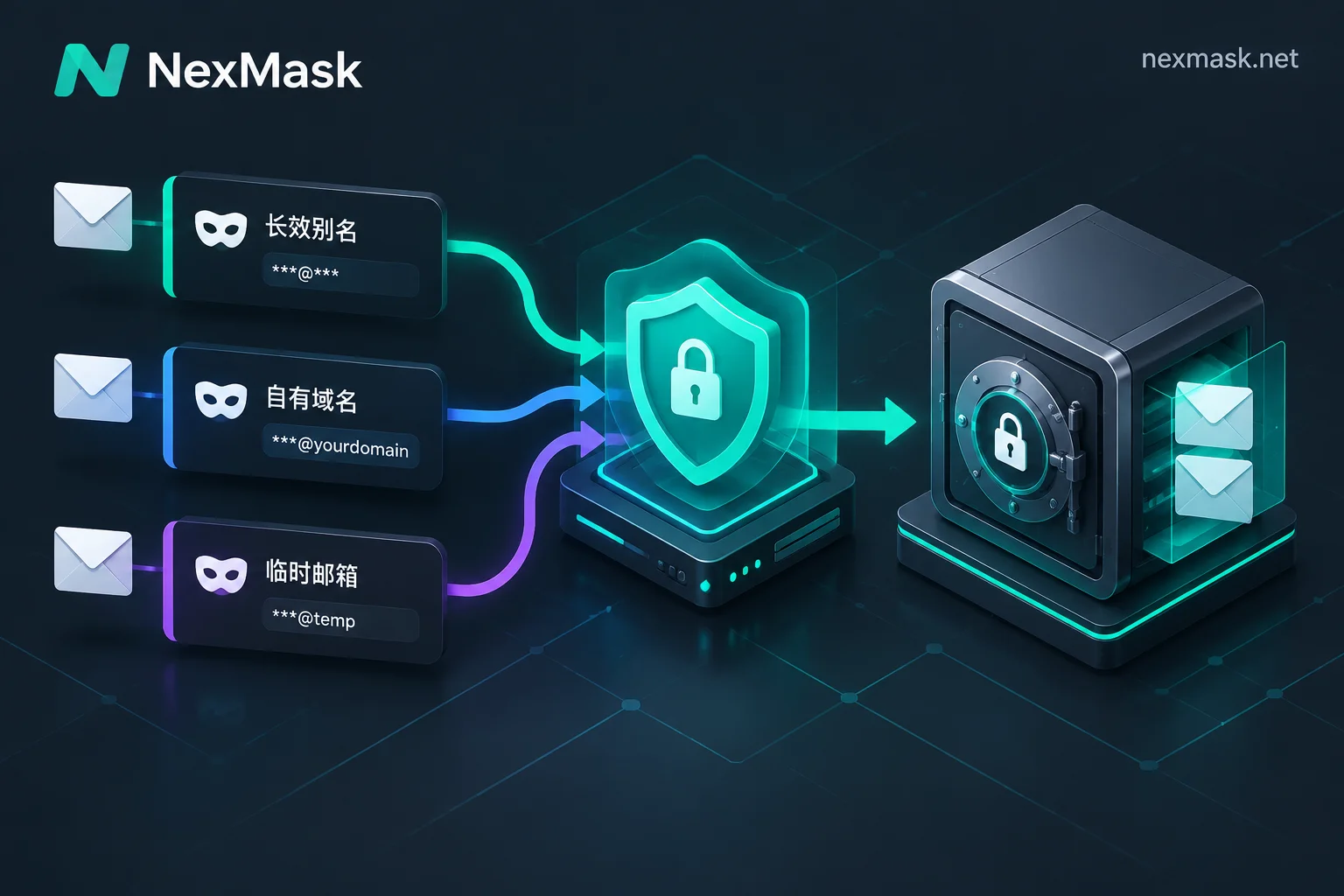
Which Segment Does Each of NexMask's Three Tool Types Cover: Temporary Inbox, Alias Forwarding, Random Identity
Compared to the scenarios in the previous section, NexMask's three entry points correspond to the three tiers in the table. The following capabilities are based on NexMask's official public statements, verified as of September 2026; any storage durations, free quotas, available domains, and pricing not publicly disclosed are omitted.
Registration-Free One-Time Temporary Inbox
A registration-free one-time temporary inbox suits short-term verification and trial inboxes. The official site notes that inboxes are automatically destroyed upon expiration, so it is not suitable for accounts requiring password reset and billing notifications—this maps to the risk in the third block.
Long-Lasting Anonymous Email Alias
Long-lasting anonymous email aliases can receive emails and forward them to your commonly used inbox. Different websites can use different aliases, and each alias can be independently deactivated. This structure is ideal for long-term main accounts: it preserves recovery paths and lets you identify leak sources by seeing which alias receives spam and deactivate that alias alone, without discarding the entire account.
Custom Domain Alias
If you need long-term use, or even plan to migrate to another service in the future, a custom domain alias is a more stable choice. Refer to NexMask Custom Domain for setup steps.
Random Test Identity
Random names, addresses, cities, ZIP codes, and phones are synthetic data—they are placeholder data that follow real formats but do not correspond to real residents and cannot be used for platform compliance verification, identity authentication, or financial account opening. Using them in development and QA form testing is appropriate; in ChatGPT registration, they are useless and violate the tool's intended purpose.
FAQ
What to Do When ChatGPT Says "the email you provided is not supported"?
The "email not supported" message indicates that your domain has been blocked by OpenAI's dynamic domain filtering; it has nothing to do with whether the inbox can receive emails. The solution is to stop changing temporary domains and switch to an email or alias that can receive mail long-term and forward, then resubmit.
Can Temporary Emails Register ChatGPT?
Most public temporary email domains are filtered and rejected at submission, so this route is not feasible. Even if a rare domain isn't blocked, after the inbox is destroyed, you cannot receive password reset or new device verification emails, making the account prone to becoming a dead account. It's not recommended for accounts that need long-term use.
How Many ChatGPT Accounts Can One Person Register?
OpenAI doesn't disclose a specific limit, but the terms explicitly prohibit automated, programmatic account creation like bulk ChatGPT registration. Rather than fixating on a number, stick to the rules and assign independent recoverable emails to each legitimate long-term account to avoid association risks.
Can a ChatGPT Account Be Recovered If the Password Reset Email Is Invalid?
If the registered email was a one-time temporary email and has been destroyed, password reset emails have nowhere to go, cutting off the recovery path. Any self-service recovery that depends on the registered email will be interrupted; whether official channels accept other appeals is beyond the scope of this article. Always choose an email that can receive messages long-term and record which account uses which email.
Can Random Address Generators Be Used for Registration?
The synthetic test data from random address generators doesn't correspond to real residents, cannot pass compliance verification, and fails OpenAI's requirement for accurate and complete information. It's suitable for development debugging and form placeholders, but not for ChatGPT registration or other contexts requiring real information.


Comments(0)