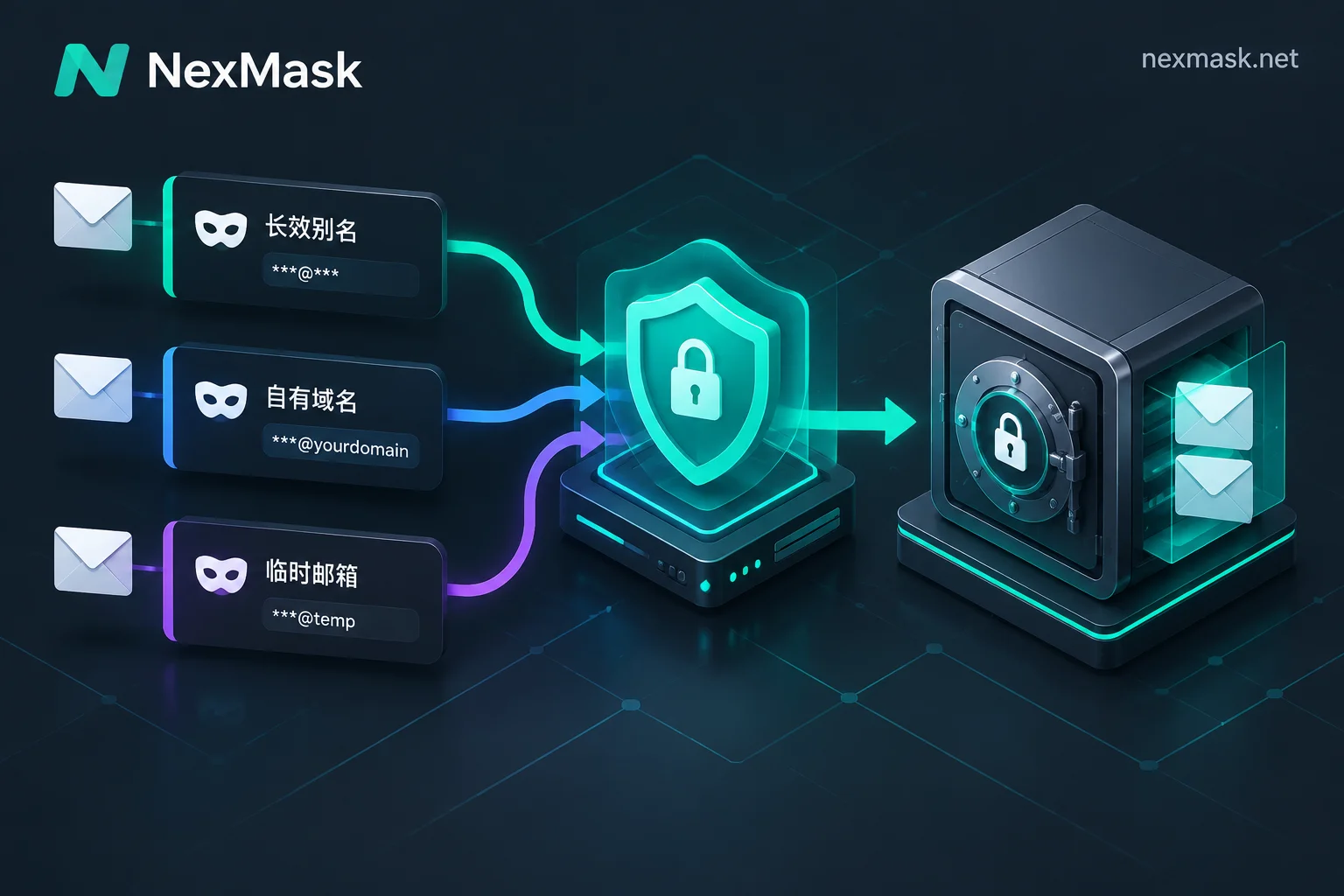
 NexMask-官方博客
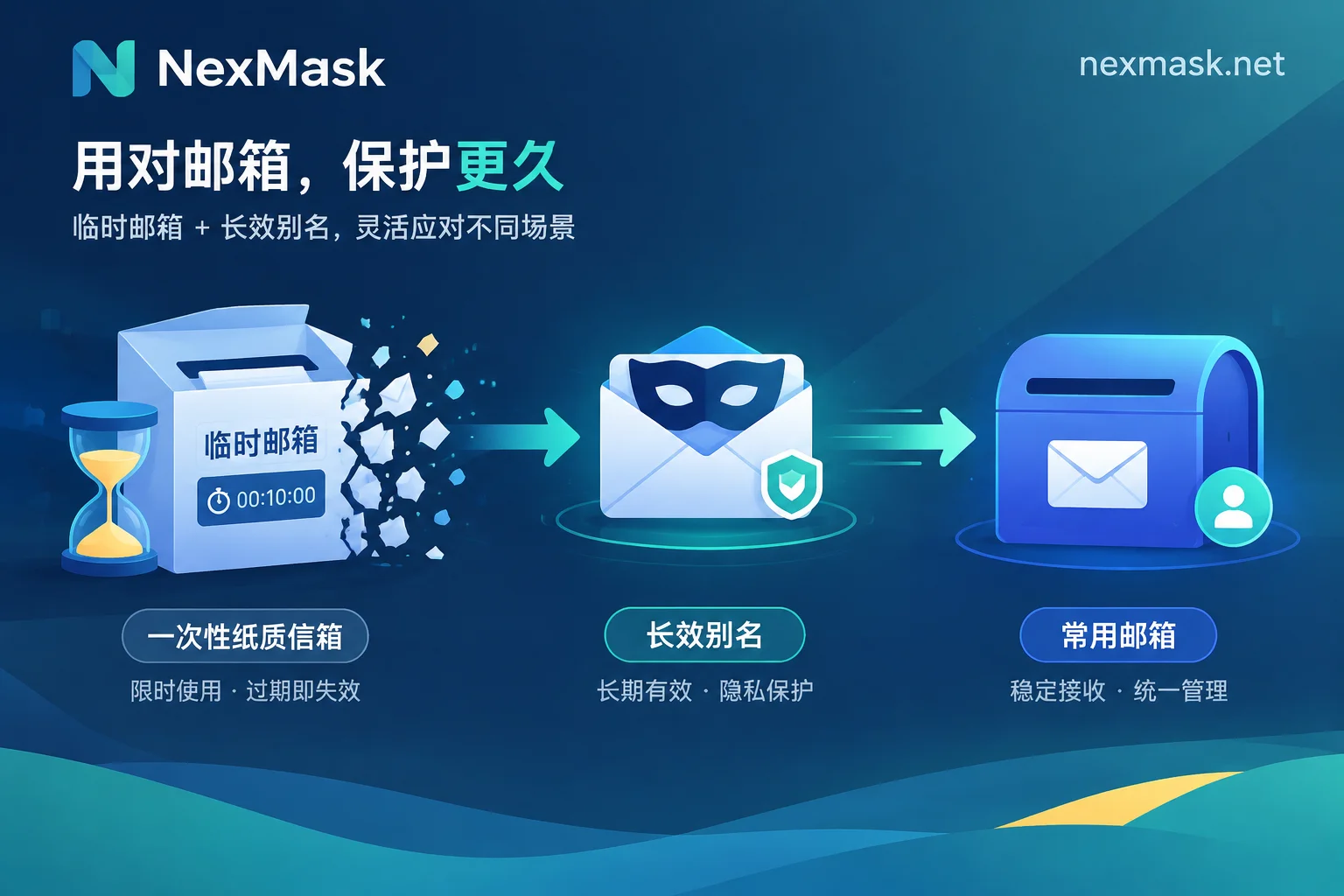
Temporary Email vs Email Alias: Will You Need to Recover the Password Later?
Temporary email and long-lived email aliases both hide your real address, but one is a disposable inbox destroyed on expiry and the other is a mask that forwards to your main inbox. This article uses the question of whether you'll need password recovery to help you choose the right tool, explains how to use each for signups, form testing, and spam prevention, and what to do if you picked wrong.
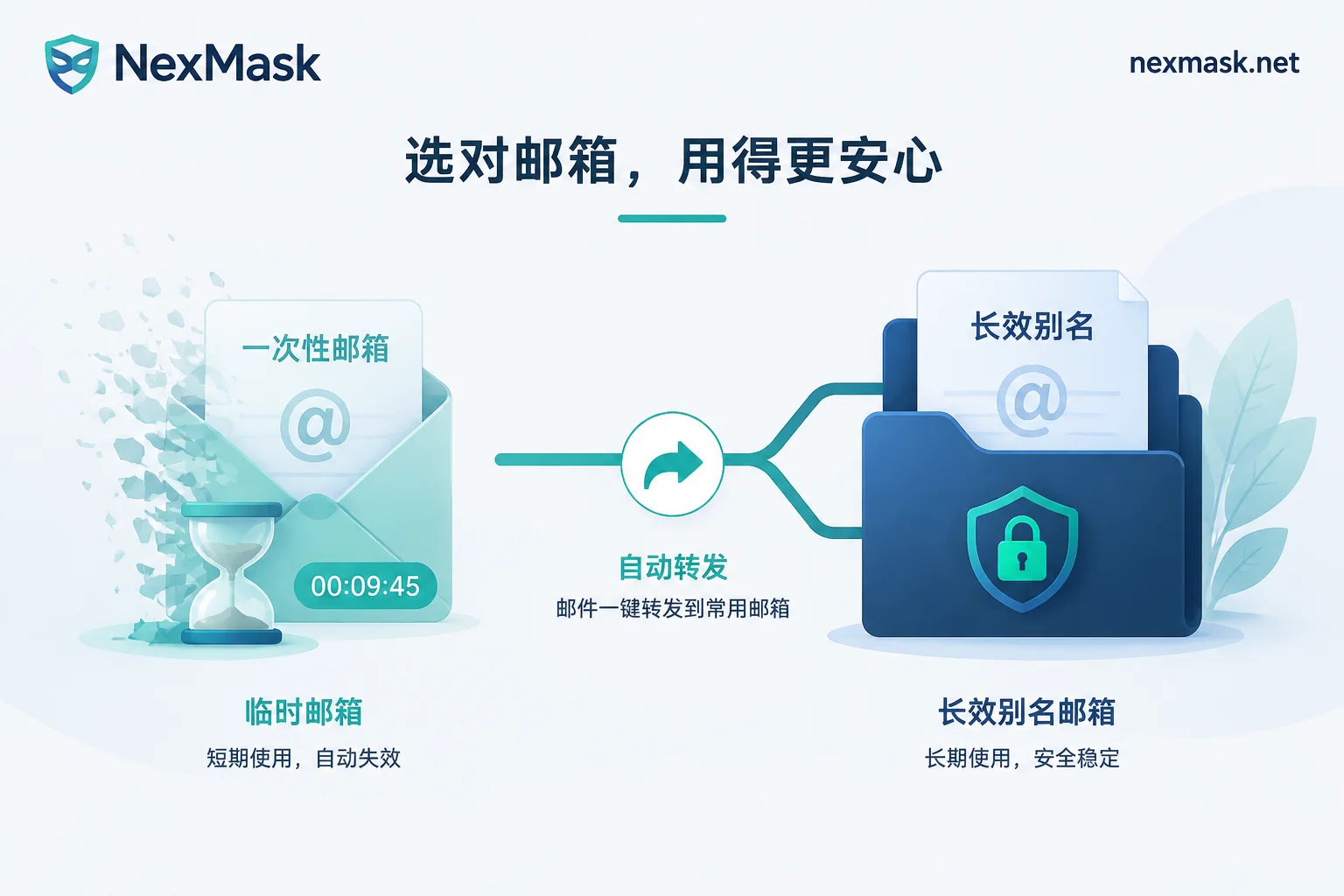
Temporary Email vs Regular Email: Five Differences That Decide Which to Use
Temporary email requires no signup and self-destructs, ideal for one-time verification codes and testing; regular email is long-term and supports password recovery, suited for important accounts. This article uses five differences to clarify the boundaries and explains how to compromise with long-lived aliases when you need a long-term account but want to protect your real email.
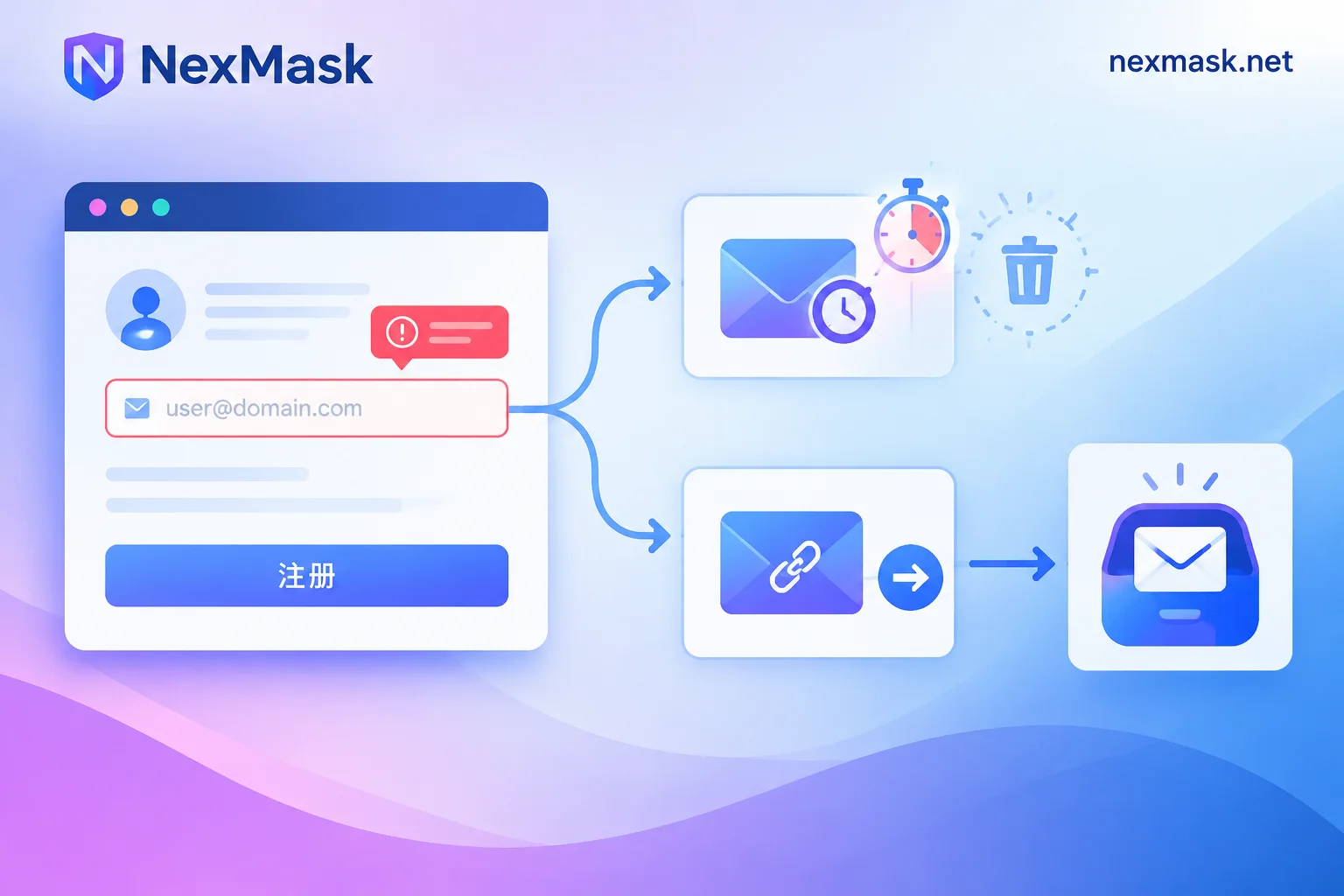
Temporary Email Verification Code Not Received? Troubleshoot by Failure Point, Then Decide If You Need a Long-Lived Alias
Verification codes not arriving can fail in three places: rejected at submission, shown as sent but inbox empty, or received but link invalid. This article provides a troubleshooting sequence, explains how platforms detect disposable emails, and clarifies the boundary between temporary emails and long-lived aliases to avoid locking accounts that require long-term login into a self-destructing inbox.
How to Use a Temporary Email: Get Verification Codes in Three Steps and When to Switch to a Long-Lived Alias
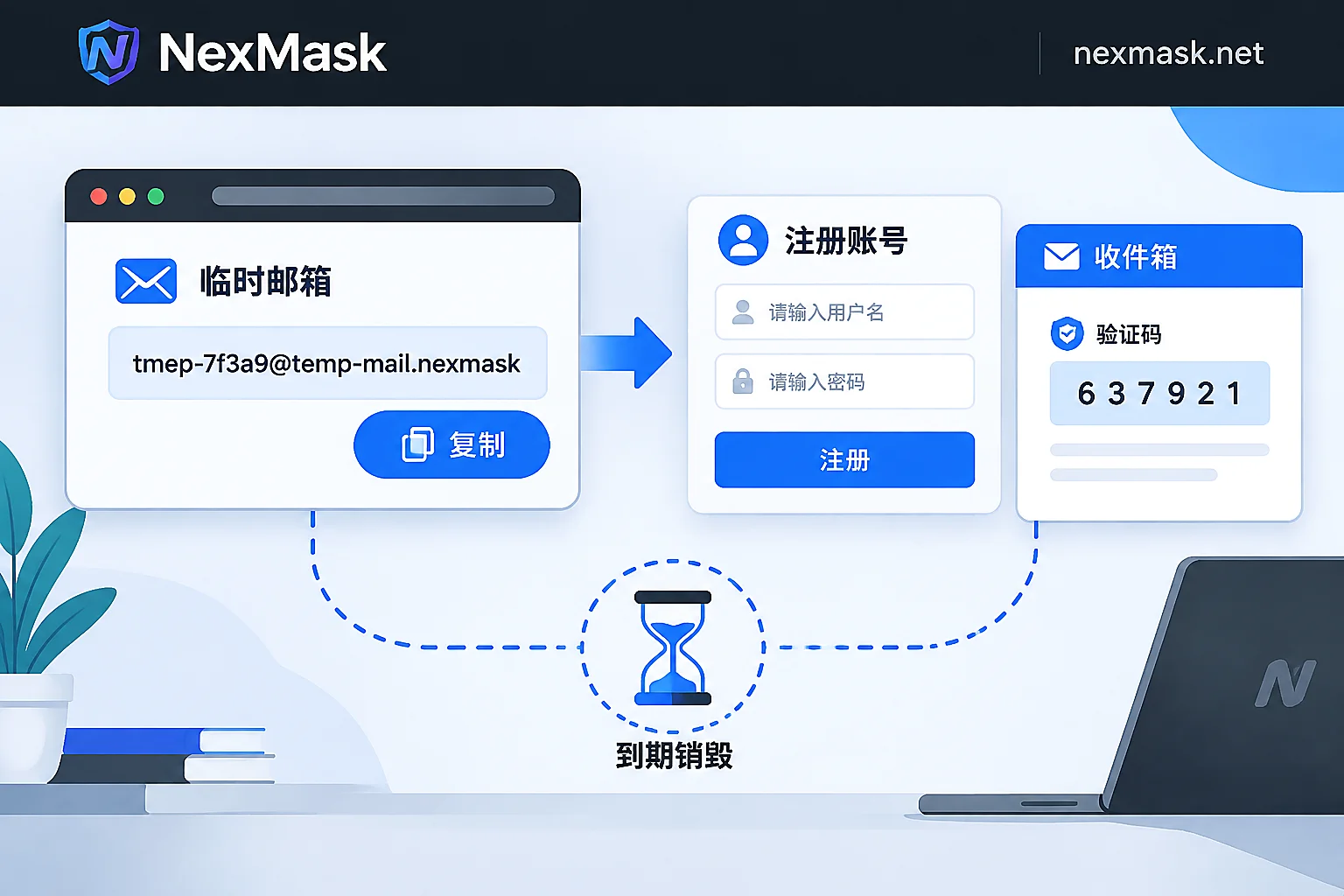
The standard way to use a temporary email is just three steps: get an address, fill in the form, and refresh to receive the code; no signup, no cancellation, and the whole inbox is destroyed at expiry. This article explains which one-off scenarios it suits, which accounts should never use it, how to diagnose and work around rejected signups or missing verification codes, and when to switch to a long-lived alias or your own domain if you need to receive mail long-term, reply, or manage many addresses.
How Does Temporary Email Auto-Destruction Work? Can It Be Recovered After Deletion?
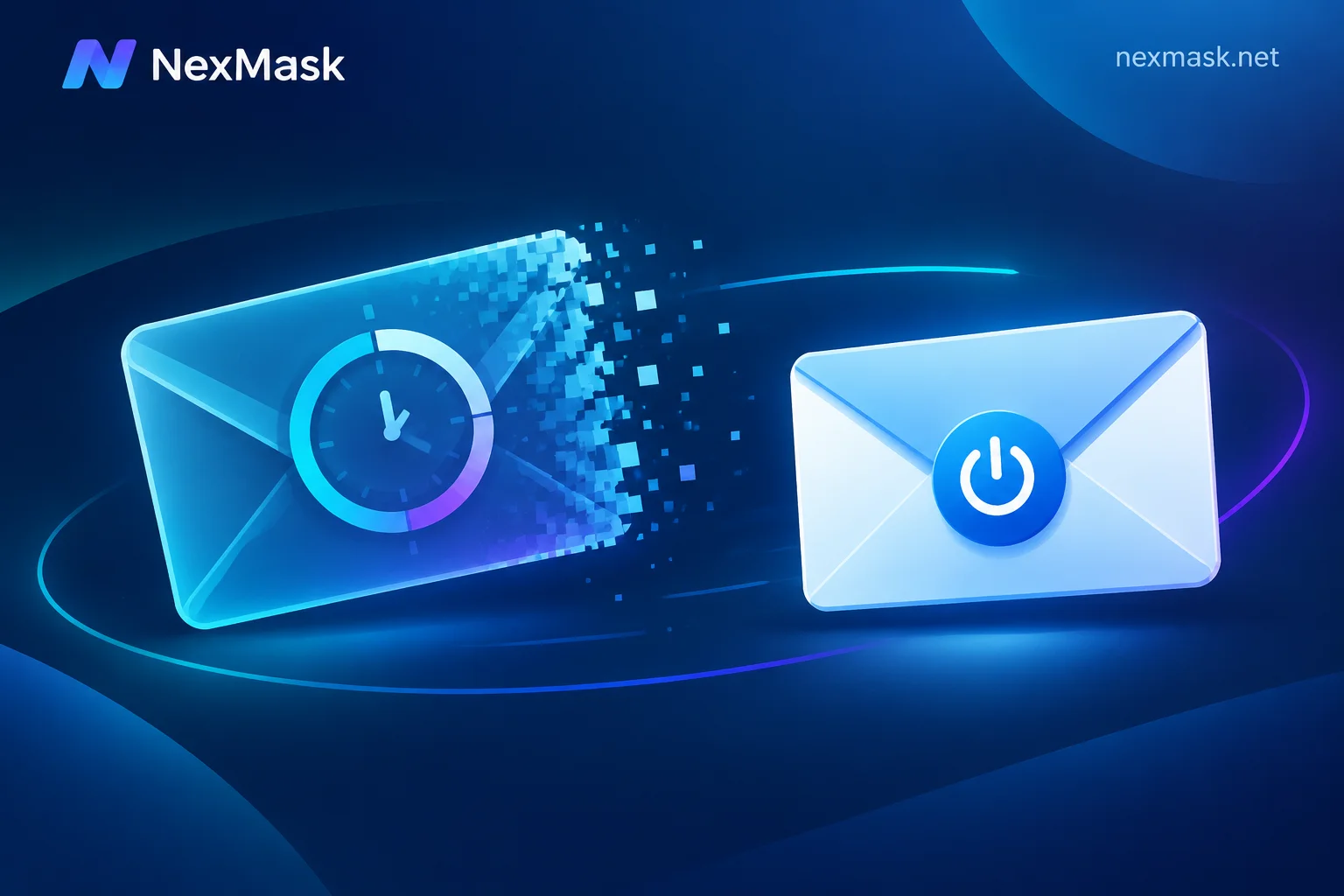
Temporary email auto-destruction deletes the address mapping and email content from storage after a set time, with no recovery option. This article explains the lifecycle mechanism, the real consequences after destruction, which scenarios are safe for disposable use, when to switch to a deactivatable long-term alias, and what to do when a one-time email is rejected during registration.